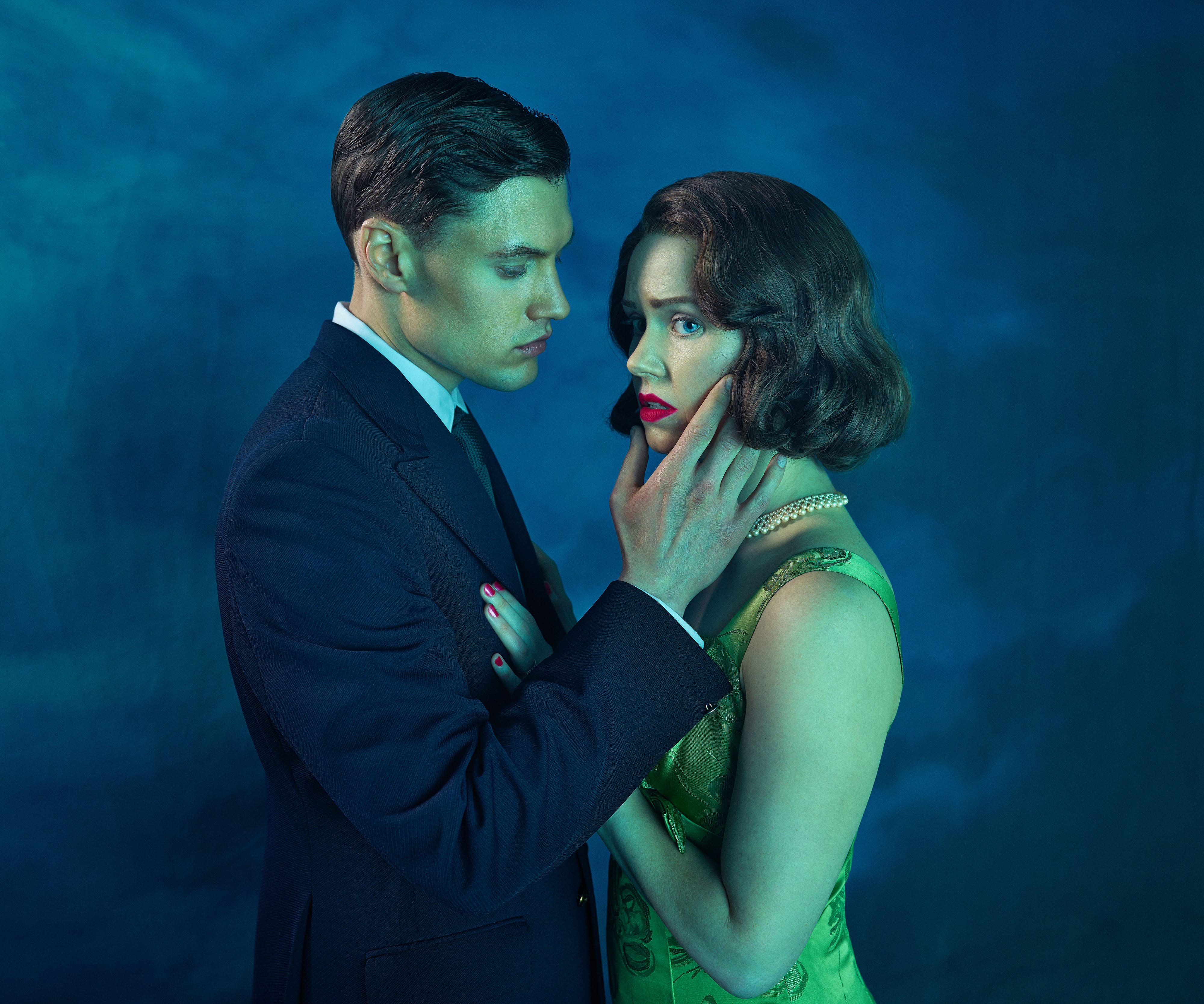
In an idyllic Oxfordshire hamlet, the fish in the river keep dying. Why? David Thewlis and Jason Watkins lead Channel 4’s shocking real-life drama of victims, whistleblowers and England’s water companies.
The promotional campaign was a combined effort from several skilled partners and included a fountain installation in London’s South Bank between 23-25th February 2026. Bronze-like statues vomit murky brown water, made in the likeness of real people, believed to have been made ill by polluted waterways. Viewers are invited to scan a QR code and listen to the first-hand stories of those affected. Curious photographer, Max Parker, took in the full impact of the installation while shooting press photos for the campaign launch.
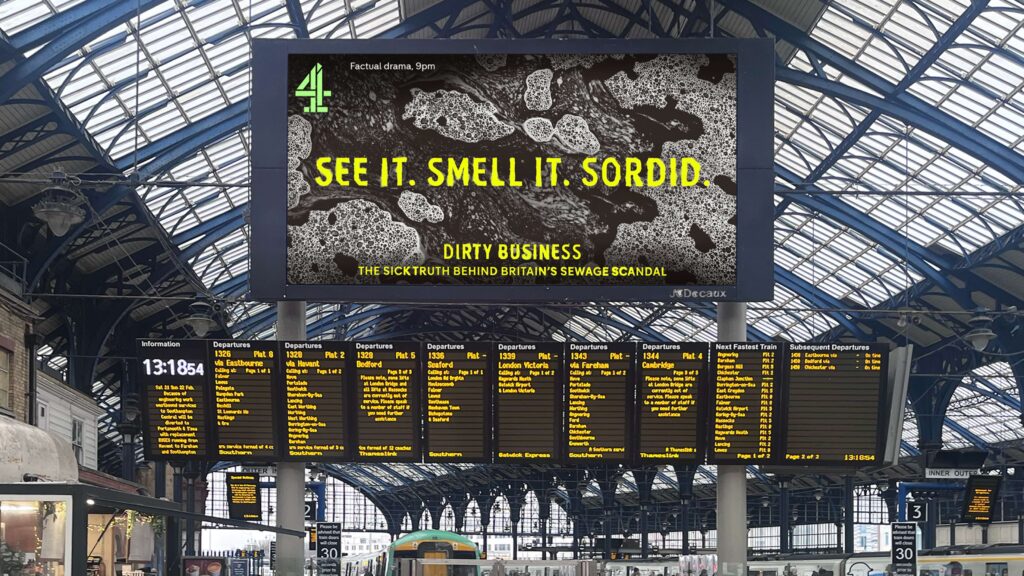
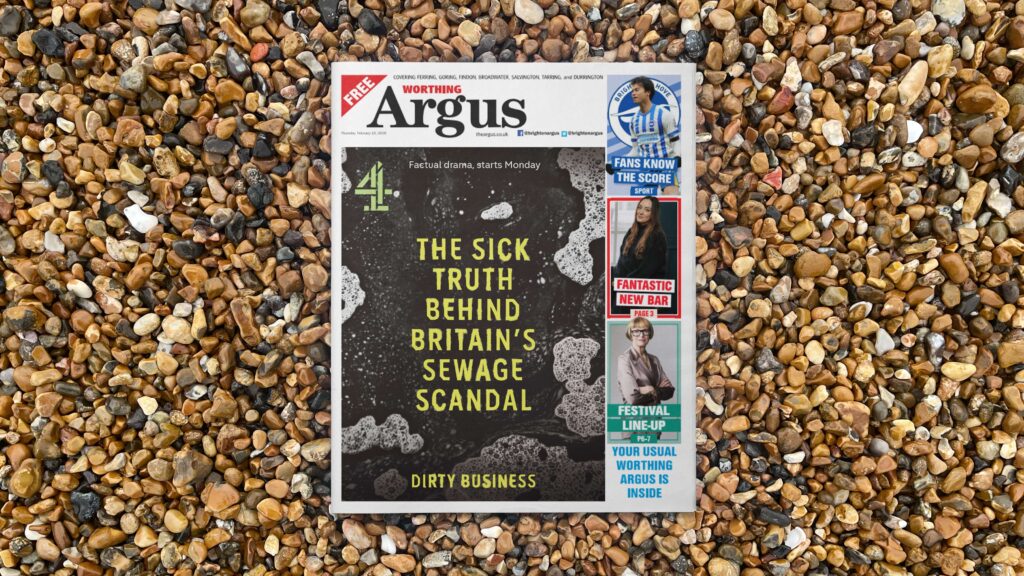
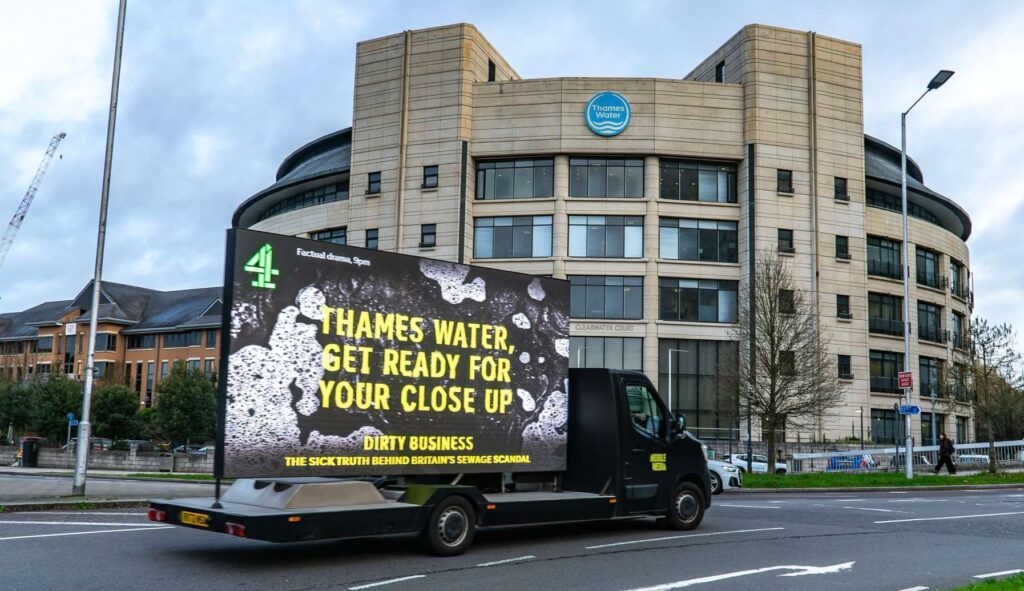
Meanwhile, over at Curious HQ, we mucked-in alongside 4Creative designer, Aimi Awang, to produce a series of OOH assets for use across digivans, Transvision and regional press cover wraps. Dirty, polluted macro water shots are overlayed with text that bleeds and distorts in response to the surrounding pollution. Each asset is designed to get up close and personal, with strategic placement and clever copy that directly challenges the water companies who play a role in the fact-based drama.
All-together, the campaign shines a grim, but effective light on the new Channel 4 series and the decade-long investigation it’s based on.
Earlier this year, Curious Productions became a proud sponsor of the Creative Circle Foundation (CCF). Along with other key industry organisations, we collectively assist students in disadvantaged circumstances to study advertising.
Savannah Finestone was helped by the CCF and tutored by the infamous Tony Cullingham of Watford College. She’s now completed her course, met her hero Trevor Robinson, secured a place at Mother London and is determined to make her Mum proud with her self-proclaimed weird and wacky ideas interspersed with some much missed humour.
We had 5 Curious minutes with Savannah…
How did you come across the CCF?
When I was applying to Watford. The Foundation had the same creative test you have to complete to get an interview for Watford. So, I completed my creative test and submitted my answers to both Tony Cullingham and the Foundation. I then had further correspondence with Jeremy Green directly to find out how the Foundation could help.
How has the CCF helped you?
They funded my Watford tuition, and without them I wouldn’t have been able to attend. They’ve put on invaluable workshops with industry greats and enabled me to meet some of my advertising heroes like Trevor Robinson and Peter Souter. To be mentored by great creatives like these, is a rare opportunity.
They have also provided myself and other students with resources like Awards annuals, Lurzer’s Archive magazines, photography books, stationary and heaps of other goodies that I would never be able to afford. All are great sources of inspiration and tools to help my creativity.
During your training, who has been your influence?
Tony Cullingham. He is a titan in this industry and has shaped me into the Creative I am today. Tough love is the name of the game but it works and you soon learn he’s got the biggest heart, really cares about the creatives he sends out into the industry and the work they make.
Mother and Wieden & Kennedy are the agencies which produce work which is matched to my personality and creative style so they are a big influence on my work and remind me to embrace my wacky ideas and style.
Also, Trevor Robinson who I’ve worked closely with, and have been mentored by, has been such a great influence. He gave me my first job and a spring board to jump into this industry headfirst. We are continuing to collaborate on future projects and he’s a great supporter of my ‘out-there’ ideas! Working with Trev is not work, it’s joyous! What’s not to love about chatting about wacky ideas, and delving into the truth of a big idea that has a true human connection to it?
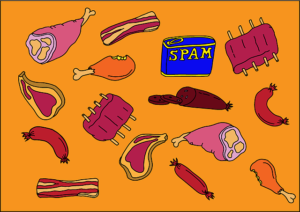
Happy Passover Porky – Savannah Finestone
What do you love about Advertising?
I get to come up with crazy ideas for a living which then becomes reality. I’ve found the perfect balance of my bananas personality, love of art, design and writing combined with problem solving. There’s no limit to creativity, and I am using my ideas to find creative solutions and make people laugh.
I also love that advertising has the power to change behaviour and influence culture. “You’ve been tangoed!” Is a perfect example! Creatives have their ideas seen by the world, and have the chance to make a change, and with advertising I have this opportunity.
Is there anything in the industry you would like to change, or anything you’d like to see more of?
I’d definitely love to see agencies being braver and going for more humour in their approaches. I think in these difficult times people have forgotten to have fun which is what this industry is about!
I love humour and weirdness. It’s what I aim for in all my work. John Heggarty said “fight for the stuff that doesn’t make sense”. And although I do believe logic makes creativity, when I see an advert that’s bizarre and a total assault on the senses, it’s so refreshing and a welcome break from the wallpaper! From Paul Arden’s series of abstract Silk Cut posters to all the Tango ads AND Flat Eric for Levi’s! A little yellow puppet as the guy’s best friend? Completely random but absolutely brilliant! The madness in the method!
What campaign/s made you want to work in advertising?
Water in Majorca Heineken advert. Had me in stitches, proper vintage gem of advertising. Saw it and knew this is what I need to do! Just pure simple genius!
Heineken – Water in Majorca – Lowe
How important do you think awards are to creatives?
This is tricky because I’m very competitive and the thought of winning awards spurs me on to do well. I like acknowledgement of my work, maybe that’s wrong of me to seek approval for my ideas but I think that’s human nature. I was always told to seek criticism, not praise as that’s how you improve but I’m my own worst critic and super hard on myself anyway, so when someone else appreciates what I do it’s a welcome boost. However, I remind myself not to get hung up on awards and the politics behind them. It’s easy to seek peer approval, but for me it’s more important what the general public think, and about how my work affects everyday lives, changes behaviour and culture. I want people to feel moved by something that I’m passionate about and have put my heart into making. I want to make work that my Mum is proud of too, that’s a huge factor!
Tell us about your art
I make sculptures of prawns and screen prints of tentacley creatures – as you do!
I love graphic design and especially 80s graphics. The use of clashing colours and shapes is right up my flamboyant street. Vintage Japanese graphic design is crazy brilliant! The artists have incredible imagination.
However, I do have eclectic taste and also love anatomical drawings, vintage school posters and am a sucker for embroidered artwork.
I wouldn’t say I have a defined style as my taste is constantly changing. I go through different phases of types of graphic design I’m drawn to, learn as much as I can and how to achieve my own interpretation, and then move on to my next project.
What are your plans for the future?
I want to run my own agency one day and make work that cuts through the norm, changes culture and has a touch of madness in every piece we create. Risk taking will be high priority!
I’ve also been working on illustrations for a children’s book and an adult comic book about mental health issues so watch this space.
But for now, I’m focusing on securing a job and making Mumma proud!
Andy Lo Pó is an award winning photographic artist hailing from Melbourne, Australia. After graduating from the University of Arts London, he settled in our nation’s capital and now creates images for editorial and commercials. Impressively, some of his work is due to go on display at the National Portrait Gallery, and we are excited to say, one of his personal pieces is hanging in the Curious gallery.
Andy is known for his portraiture work, and collaborated with Curious most recently on a campaign for MTV.
We had 5 Curious minutes with Andy Lo Pó…
Who or what inspired you to be a photographer?
I’ve always been fascinated by visual mediums – I think the nice thing about photography is that you can pick up any camera and start shooting and you have your results very quickly; whether shooting on film or digital.
What is your favourite piece of work?
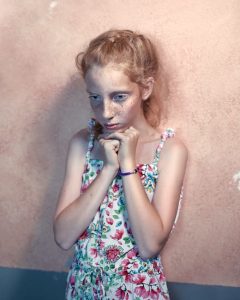
I’d say right now it’s my piece: “Girl outside the Pizzeria at Night”. It was a spontaneous portrait I took in Sardinia after a long and trying day at an ancient horse race. It’s just been selected as part of this year’s Taylor Wessing Portrait Prize and will be displayed at the National Portrait Gallery.
Girl outside the Pizzeria at Night – Andy Lo Pó
Funniest moment on set?
I’ve seen both funny and scary… Ricky Gervais lying on the floor holding a banana to his head was quite funny I suppose.
What photo or series of photos do you wish you’d taken?
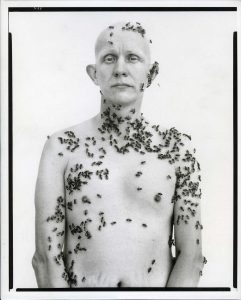
I’m going to say Avedon’s “In the American West” as it’s just such an incredible body of work over a very interesting period in time. It also contains the beautiful and otherworldly portrait of Beekeeper Ronald Fischer, which was quite an influential image early on for me and really piqued my interest in photographic portraiture.
Beekeeper from In The American West – Richard Avedon
What was the best piece of advice you were given?
Not advice really but one of my lecturers when I was studying always gave me a lot of encouragement – it’s nice when someone believes in your work.
Your use of light and colour really makes your work stand out, and is mainly captured in camera. Do you think post production can devalue photography or does it add a level?
For me, you can’t recreate the mood captured in camera and you can’t recreate the lighting either. When I’m shooting a portrait it’s about finding that fraction of a second when you get just the right emotional response from the sitter at the same moment that the light is perfectly falling on them. Now, obviously, post production may be able to enhance what you’ve already achieved and if we’re talking commercial work then it really can add the final polish that the client is after. It also takes quite a talented retoucher to really understand a photographer and how they like to work with post production.
Your portfolio suggests that your favourite subject is the human form. Where did your passion for this originate?
Like all of us growing up, we’re surrounded by the human form, so it’s there and it’s fascinating from a very young age. Then in time you start being introduced to the human form in art, in film and music video. I still remember seeing different things on the telly when I was quite young; various music videos, horror films etc. Some of these images stuck with me and I guess they all contributed.
What have been the most memorable moments in your career?
There’s been a few. It can be a gradual process but then you can also have bigger moments that tend to speed things up. Those very first editorial and advertising commissions can be quite pivotal moments that perhaps you don’t fully recognise at the time. The same with awards. But there’s still nothing like the feeling of knowing you’ve got a shot that you feel really happy with.
What have been the moments you’d rather forget?
Not many really. The odd person that’s just not interested in being photographed…
What are you most grateful for?
I feel privileged to be able to work in a competitive industry with a medium that I love.
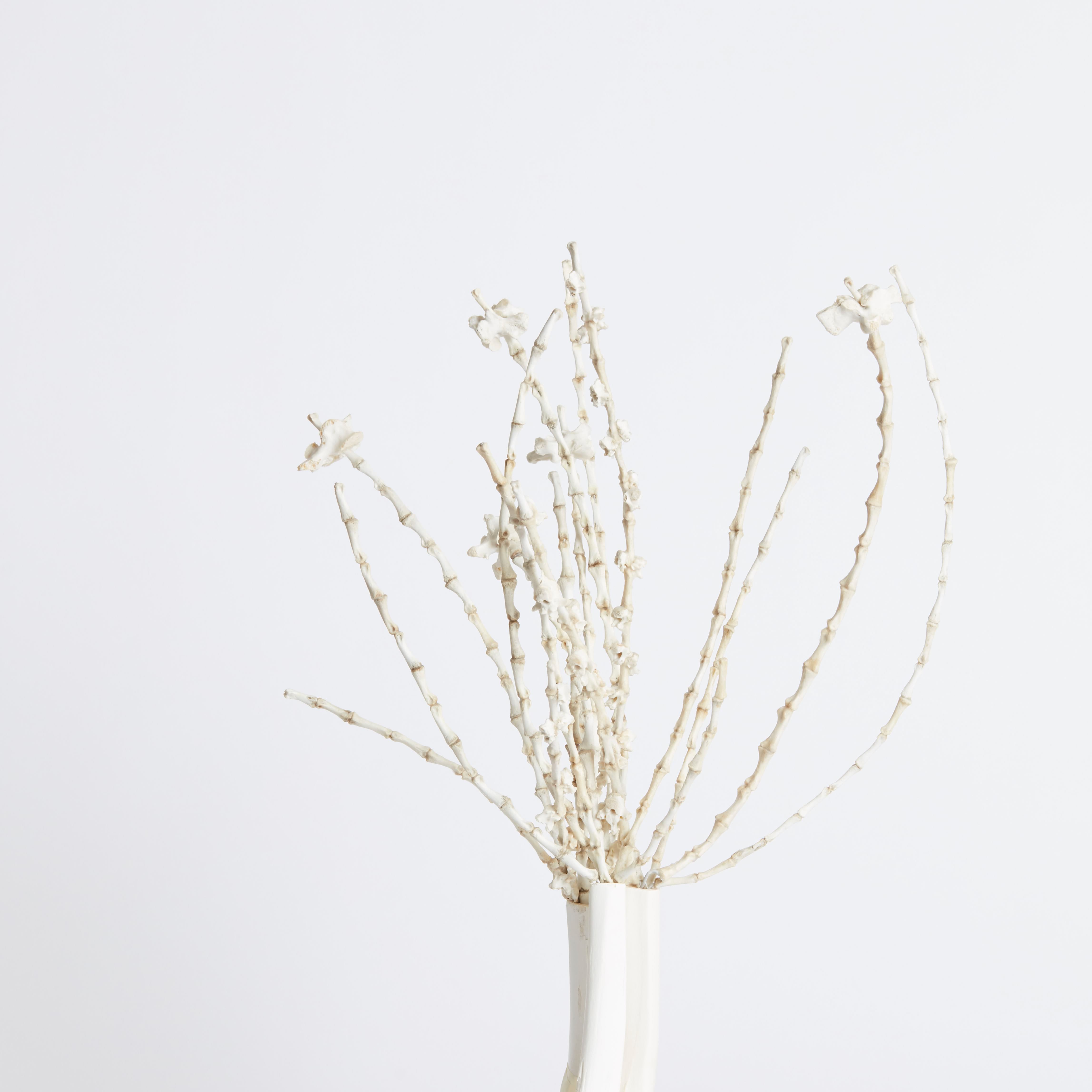
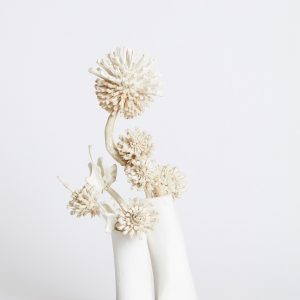
We’ve collaborated again with sculpture artist Emma Witter, this time for her Artist in Residence commission for HIX ART. The body of work entitled BLOOM launched at Tramshed on 27th March to an audience of Mark Hix’s artist and creative community. A film created by Curious was projected alongside the pieces to complement the work by highlighting the intricacy and colour palette of the sculptures.
The film, directed by Curious’ Dan Humphreys, shows how science meets nature and the level of detail that goes into crafting the pieces and the process behind it: the boiling, bubbling and bleaching.
See the film here:
BLOOM derives from Emma’s insistence of the beauty of bones, which she salvages from her own cooking, and in the case of this launch, from the restaurant. After meticulously cleaning, bleaching and categorising the bones she assembles them into ornamental and floral forms.
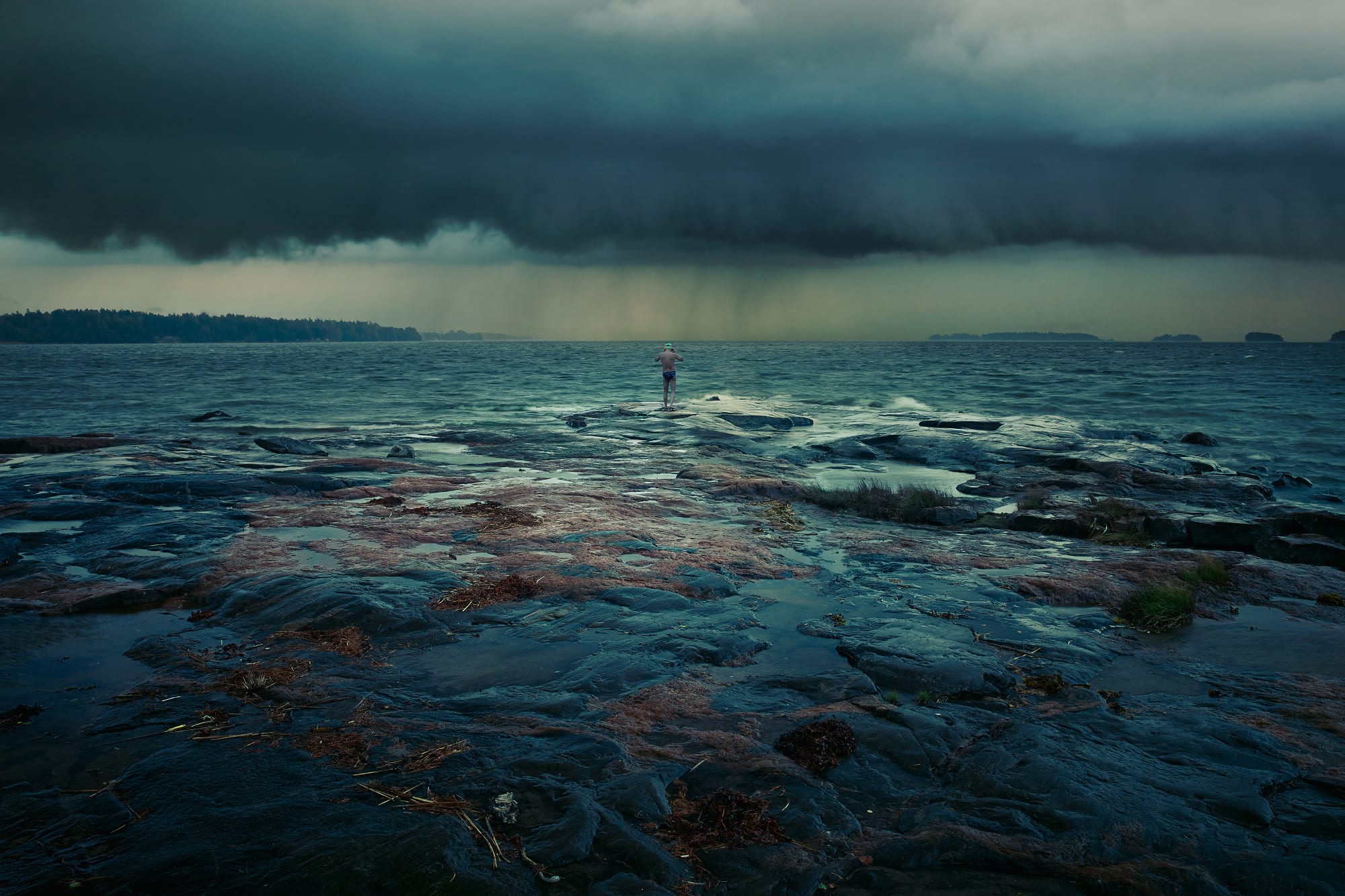
Todd Antony captures characters from diverse contexts and far-flung locations. His work has featured in numerous awards, including the AOP Awards and American Photography Awards, as well as included in Luerzer’s Archive ‘200 Best Advertising Photographers Worldwide’. His work has been exhibited in London, the USA and France.
Who or what inspired you to be a photographer?
I remember my dad bringing a camera home from his office one day when I was about 10 or 11, a Canon EOS 650. I started taking photographs of anything and everything. The camera never made it back to his office, and it just continued from there.
What photo or series of photos do you wish you’d taken?
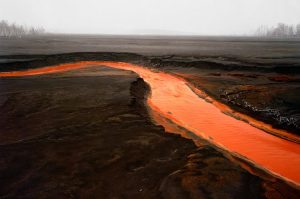
Edward Burtynsky’s ‘Tailings’ from his ‘Manufactured Landscapes’ book. Arresting images, both visually and emotionally, when the viewer stops to think about what it is they’re actually viewing and appreciating.
Tailings, Edward Burtynsky
You’re known for the fabulous locations you shoot in. Do you have a favourite place and why?
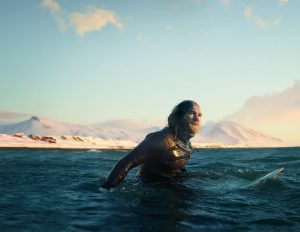
Oh man, so many. Had a pretty amazing shoot in Iceland last year, where the brief was to shoot an ‘ice surfer’ paddling out at sunrise. It was February, and the day before we landed they had their heaviest single snowfall since 1951. So there we were pre dawn, wearing dry suits, walking through 2ft of snow down to a black sand beach. The snow hadn’t settled on the sand because of the tides, so there was a sharp line where pure white snow met jet black sand and crashing waves. We headed out into the 3 degree water (which was 7 degrees warmer than being out of the water) for a cloudless sunrise accompanied only by a friendly local seal and a snowy mountain range rising up behind the black sand beach. Doesn’t really get much more special than that.
What is your favourite piece of work?
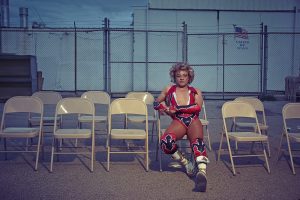
That’s a tricky one, as from my perspective its not just about the image, but the experience behind getting a particular shot. The shot for Skyr Yoghurt of the surfer in Iceland I mentioned above, I really love for exactly that reason. As far as a whole body of work goes I think my favourite campaign I’ve shot was for Finlandia Vodka. We spent 2 weeks traveling all over the world with an amazing team, shooting ordinary people who lead extraordinary lives. A gay, drag, Luche Libre wrestler in El Paso, a funeral dancer in New Orleans, a guy who looks after 4 grizzly bears in Lapland, one of which I got to feed strawberries to. It was a long list of incredible people and we all came away feeling massively fulfilled experiencing a small window into each of their lives.
Was pre-visualising the RDG ‘Britain Runs on Rail’ project in CGI prior to the shoot an effective process? Would you use that approach in the future?’
I can’t emphasise just how effective and beneficial it was. I wouldn’t hesitate to use that approach again on any relevant projects in the future. I’m not sure a couple of the shots in the campaign would have even been possible without having the pre-vis. It allowed the set builders to prefabricate certain elements ahead of time and to exactly the size and scale we needed, eliminating any guess work or having to correct it in post production.
Does image post production de-value photography?
Overall I don’t think so, no. When it’s implemented poorly then yes, it can. But done in the right way I think it works symbiotically with photography. Like anything, it’s about using the right tool for the job. If you’re a documentary photographer, then balancing out your levels and colour should be the fullest extent of its application in order to maintain editorial credibility. At the other end of the scale you can have can a highly conceptual advertising shot which requires extensive post production, and the idea may not be achievable without it. Staying within the real world rules of photography when using post is the key.
If you could give any advice to emerging photographers, what would it be?
Shoot as much as possible. And shoot what you enjoy the most. It’s the only way to develop your style, and find out what avenue you want to take in the long term. There’s so many different genres within photography. You’re always going to be more invested and motivated if it’s a subject connects with you.
Can you tell us a funny on-set story?
There’s been a fair few. But I think the award for the most surreal, goes to a shoot in Moscow. It was -20 degrees, and we were shooting 3 Ferrari’s in Red Square, with St Basil’s cathedral in the background. Cue a bridal party having their own photoshoot, strolling into the middle of our shot and deciding to use the cars as their own backdrop, posing elaborately in front of them. I only had 20 minutes before we had to clear the cars and my batteries (along with pretty much every part of my body) were struggling in the cold. My exasperated pleas for them to get out of our shot were met with a tirade of abuse from the Russian bride, who helpfully and not so subtly pointed out to me that “you in Russia now!!” in case I wasn’t already very aware of that fact. To this day I’m still not entirely sure what bridal party goes out for a photoshoot at 8am in -20?
Who is your hero?
After wracking my brain it’s occurred to me that I don’t actually have one. Slightly concerned what that might say about me as a person! Of course I greatly admire what alot of people do, but I guess it stems from back in my sporting days. My squad had the ethos that if you give someone hero status, you’re in some way implying that the level they’re are at isn’t achievable.
What are you most grateful for?
It likely sounds a bit corny, but that I get to do what I love for a living. The majority of people aren’t able to do that as their day-to-day. I’ve always said if I won the lottery tomorrow I’d still keep doing what I’m doing… I’d probably just end up buying an unnecessary number of cameras.
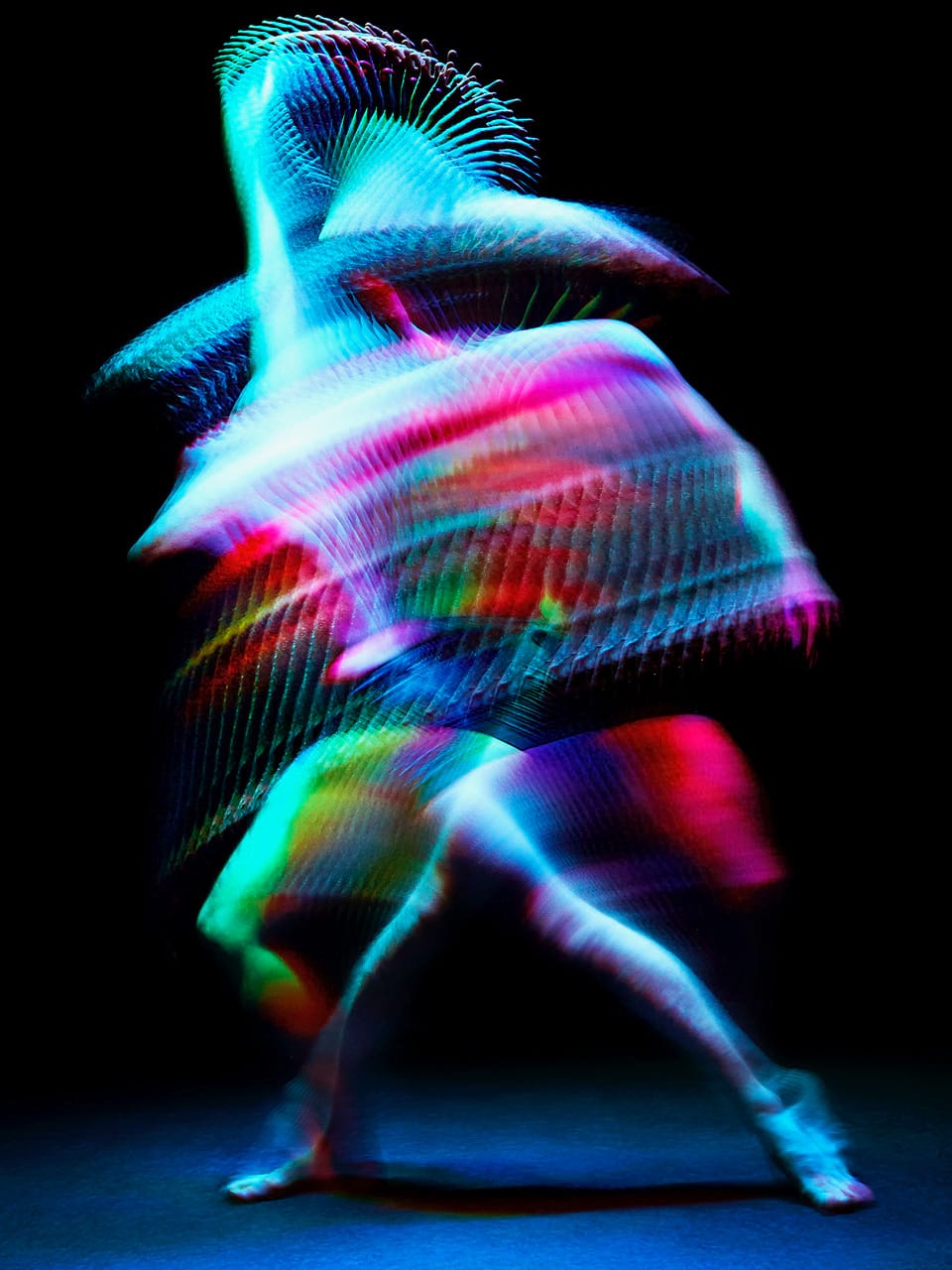
Seasoned photographer Rick Guest is as refreshingly nice as he is talented. Whether shooting A-List actors and sports stars, car brand commercials or indulging in his passion for ballet, Ricks work is always awe inspiring. His work with the Royal Ballet made him a perfect choice for the Lexus ‘Gymnast’ project.
We had 5 Curious minutes with Rick Guest
Who or what inspired you to be a photographer?
So much in life is just plain luck and circumstance. At school I was allowed to drop art, and essentially anything artistic by 11. So I studied sciences all the way through to university, and after a year and a half of a computer science degree I dropped out, as it just didn’t seem to be remotely fulfilling to me. I came down with a really bad illness in my late teens and when recovering came across a camera in the house and picked it up out of sheer boredom; it was a revelation. To be able to frame life, to literally take a viewpoint, perhaps to exert some sort of control over the world at a time when I felt none, was some sort of ‘Damascus’ moment for me. Then with the combination of beginner’s luck and the joy at having created something – obviously this was back in the world of actual prints that you could hold in your hand – it just made sense as the way forward.
What draws you to a project?
It entirely depends on the project, but it’s usually a combination of the craft and art involved, two factors most photographers consider when taking on a job. In commercial photography, the client buys into you as a photographer, and the process of creating is highly collaborative with both agency and client, and requires bringing all your craft to the fore, even if the situation isn’t necessarily your personal aesthetic, but best serves the client.
The other side is where the photographer is the ‘artist’, where you create work in complete creative freedom, and sell it after. The trick is bringing that artistic passion into the realm of craft.
I’m a worker by nature, and I love to turn up and work every day, so am a firm believer that there’s an artistic solution to every commercial set of constraints. Sometimes the problem is solved diplomatically, rather than photographically, as clients need to be led through a project to become as emotionally connected as the creatives are.
There’s a lot of light play and illumination across your work and in your exposure of subjects. Why is that?
Probably because of a techie background and vast amounts of time sitting in front of the TV as a kid. I like lighting, I like creating worlds that are better and brighter than real life.
Lexus ‘Gymnast’
Tell about how the interest in ballet started
I was commissioned to take a portrait of a Principal of The Royal Ballet, a dancer called Edward Watson about seven or eight years ago. It was a simple portrait and afterwards he asked me if I’d like to see him dance; he was simply breath taking and I fell in love with both dance and dancers right there. Two books, three sell out shows, as well as work being acquired and shown at the National Portrait Gallery, and I’m still constantly blown away by their prowess and spirit every time we shoot.
To come full circle, I’m in the middle of a book for Edward right now, he’s still incredible.
(L-R) Edward Watson and Sergei Polunin
You’ve worked with some A-Listers, have you ever been ‘star struck’?
Not really star-struck ever, but to see any performer or athlete who is one of the best at what they do on the planet, do their thing right in front of you, is incredibly impressive and rewarding, it beats a real job. A favourite moment will always be shooting Jeff Bridges for Esquire; he was, in every way, the Dude.
Does image post production de-value photography?
Not for a minute, it’s just another tool to realise your vision. As soon as a photographer chooses a lens, or where to stand, or how things are lit, reality’s out of the window and only the photographer’s truth will be left.
The only way it devalues anything, is that a digital workflow allows for far less decision making on the day. What we used to think of as trust back in the days of film, was just process enforced exclusion of anyone else, so your career lived or died on your success at putting your head on the block every day; it was a harsh way to learn, but incredibly useful.
How do you approach, and meet the demand for stills and moving image on the same project?
In exactly the same way, the only problem is one of time, as clients most often want to double the workload by doing both without doubling the time, but the vision and process is identical for me.
What photo or series of photos do you wish you’d taken?
Anything by Lee Friedlander or Garry Winogrand; to have walked the streets with them in the States at that time, Leica in hand, would have been incredible.
(L-R) Lee Friedlander and Garry Winogrand
Tell us about a funny moment on set?
Too many to mention, but not always related to the job. I have an incredible first assistant and a terrific crew and we laugh an awful lot. Everyone knows their job inside out, and the confidence of that on set allows a great deal of mutual harassment and abuse.
What are you most grateful for?
Outside of my family, simply having got away with it for so long. It’s never really felt like work, so it’s always had a slightly guilty edge. I guess I’m most grateful for being lucky, to be able to do something I love, with people I like, and to be able to look back and say, yeah, we did that…
Andy Glass began his career as a purist landscape photographer and is now a leading talent in blending pure photography, digital enhancement and computer generated elements. His work appears regularly in the photographic press and in reviews of any year’s best photography, and he recently worked with Curious Productions on the Lexus ‘Shift’ campaign.
We had 5 Curious Minutes with Andy Glass.
Who or what inspired you to be a photographer?
My German grandfather was a very keen photographer – he used to show me his albums that were taken during WW2 which I found fascinating. I remember an image he shot on the beach in Dunkirk of a British airman who had been shot down, he was wearing a full black tie underneath his flight jacket – possibly scrambled directly from a dance, kissed his sweetheart goodbye and jumped into his Spitfire.
Apart from your camera, what piece of photographic equipment could you not do without?
The app Helios – really handy for sun positions, shadow length etc.
Funniest moment on set?
There have definitely been a few moments, a couple of them on a nudist beach in San Francisco, but it would probably have to be a Peugeot shoot in the South of France – car was on the road with a hairpin bend behind it – as soon as we set up somewhat older Peugeot broke down on the corner and couldn’t be moved. It was also the day after England had just controversially beaten France in the 6 Nations rugby, so nobody stopped at traffic control –a classic and chaotic day.
What photo or series of photos do you wish you’d taken?
The Desert Canto series by Richard Misrach – I think he has influenced more photographers in advertising than anyone I can think of.
Desert Canto series, Richard Misrach
Which piece of your own work are you most proud of?
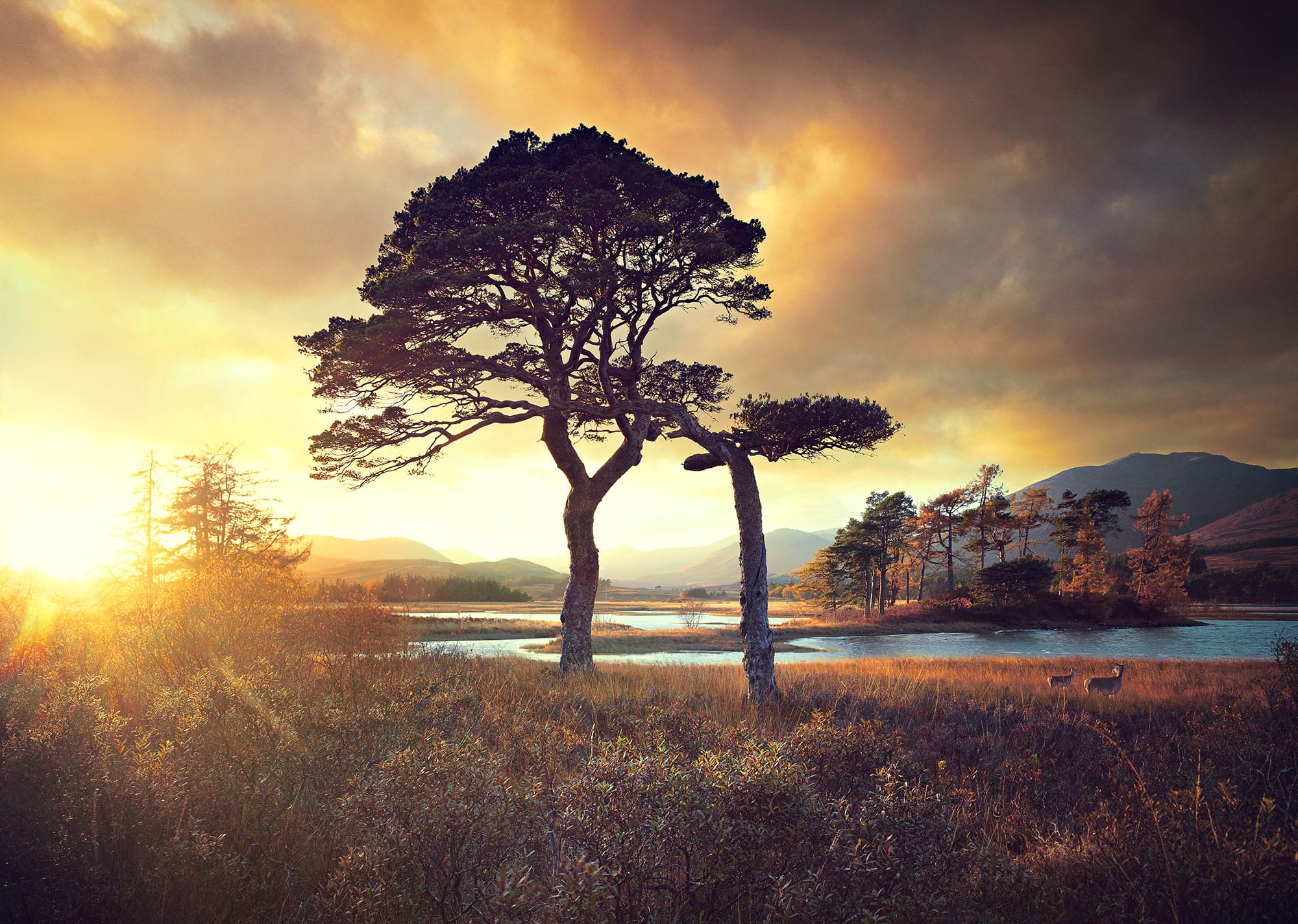
Hard to pick one, because they all have different experiences attached to them but it could be a personal shot I took in Loch Tulla in Scotland – a place I returned to many times before getting something I was really happy with.
Does image post production de-value photography?
Every image whether film or digital, undergoes some form of enhancement.
It is only devalued if the process takes way from the integrity of the image.
I think there is an increasing temptation to use Photoshop gimmicks, particularly flares and grading plug-ins etc to make a boring picture more interesting, so yes it can but it shouldn’t.
CGI features heavily in your work. What would you say to photographers who are skeptical from a photographic point of view?
The challenge for us is to be able to integrate CGI into photographic realism. I remember there being a similar skepticism around Photoshop. If it can’t be done for real, then why not use CGI? It is just another creative tool in the box, but clearly one that has to be executed correctly.
Given your background in landscape photography, do you feel that this naturally draws you to ideas with an epic visual scale and technical scope?
Good question, I have never really considered it before now. I like making epic pictures and it could well come from the openness of landscape, but I am also drawn to the details – nature can be amazing at any scale.
You work with and collaborate with creatives on ideas that cross over between photography, CGI and creative direction. What do you think compels creatives to work with you in this way?
Quite often I work with creatives who I have only just met, we spend a very short and intense time together, totally focused on a single image. I love the collaborative nature of advertising – It is the most enjoyable part of the job for me, especially when everyone is adding some value to the final image.
If you could give any advice to emerging photographers, what would it be?
Be original and photograph what you love.
What was the best piece of advice you were given?
Be original and photograph what you love.
In your career, what’s been the biggest change in the Industry?
Not sure which one would be the biggest, but the 2 colossal shifts in photography have been the shift from film to digital and the advent of CGI – I grew up with the technical rigour of exposing large format transparencies and loved the precision of the craft, but the creative freedom of digital has been a interesting release – it has made everyone a photographer.
What’s the last piece of music you last listened to?
The first of the gang to die – Morrissey.
Who’s your hero?
Alan Knott, Kent and England wicket keeper – wanted to be like him as a boy, still do actually.
Jason is extremely hands-on on-set, casting models who are coached to act out a character in order to capture that perfect shot. This approach has enabled Jason to Direct and often finds himself shooting both stills and moving image on the same project.
Who or what inspired you to be a photographer? I was given a camera at the age of 7 by my dad, he was a keen photographer. He wouldn’t let me have a drum kit so I started taking snaps.
What was your first job? I was always a bit of a ‘Del Boy’ through Uni and got into assisting, but my first commission came through Chrysalis Records and I did a string of covers for The Waterboys, Carter USM and Kingmaker.
Apart from your camera, what piece of photographic equipment could you not do without? I guess spare batteries to keep the camera running, you can capture a shot with a biscuit tin if you know what you are doing. As long as you have a camera of some sort that fires, you will go home with a shot.
What is your favourite piece of work? Cliche, but usually my next one that gives me a buzz. I’m always moving forwards, always seeing new stuff to shoot and love knowing that next week I’ll have created something that right now doesn’t exist. I don’t have a great attention span.
Funniest moment on set?
Sending my then assistant, Jem Mitchell, to my car for a bit of kit.
He was gone an age, when I went to see what he was up to he was over the car with two women holding him down insisting he was stealing the car. I said it was mine, she looked me up and down and said “I don’t believe you”. It was the look on Jem’s face, wish I had my camera on me . . .
What photo or series of photos do you wish you’d taken? Peter Lindbergh is a photographer that has been a constant over my career. He seemed to sum up all my fav guys in my early years, Bailey, Herb Ritts, Bob Carlos Clarke, Penn, Avedon, Albert Watson, Patrick Demarchelier and Bruce Weber.
He frustrated the hell out of me in the beginning and his shots always looked so effortless. Obviously now I know it’s experience, talent, attention to detail, crew skill and just plain dammed hard work.
I loved this series, below, it really struck a chord with me. It felt like the lines between fashion, lifestyle and reportage photographer seemed to be blurring and he seemed to take fashion photography down a new path towards reportage in style, relaxing it a little, but still retaining that polish not only in execution, but in the quality of finish in the final image.
Does image post production de-value photography?
I don’t think it de-values photography. I do think it’s de-valued true photographers.
If you could give any advice to emerging photographers, what would it be? Learn your craft. In theory, in technique and in practice.
It sickens me to see courses in which the students are shooting with iPads etc; a device which is trying to catch up and replicate what cameras were doing in the beginning. Buy a proper camera and switch off all the driver aids and master Speed, Aperture and Focus!
What was the best piece of advice you were given? Relax you’re just a photographer, you don’t save lives, (Spencer Rowell).
In your career, what’s been the biggest change in the Industry?
Digital. 🙁
What’s the last piece of music you last listened to? This morning I was giving A Perfect Circle – Thirteenth Step a listen, very loud.
If you could live in a book, TV show or movie, what would it be? Thought hard and long about this question, it stumped me. I don’t think my brain is wired the right way to think like that. Reason being I’m more drawn to what Jim Morrison once said about “have you lived?”
Have you lived enough to write a book about your life? It’s not about how glamorous or how rich you are or any of that bullshit. It’s about when your time is up, did you live? I pack a lot into my life.
Who’s your hero?
I don’t do heroes. I have a shed load of people I admire and respect. The doctor that saved my sons life, people that make me laugh, people that fight wars on my behalf, people that strive to be the best they can at something, people that grab my attention through what they have done.
What are you most grateful for?
Right now, being alive… phew! 🙂
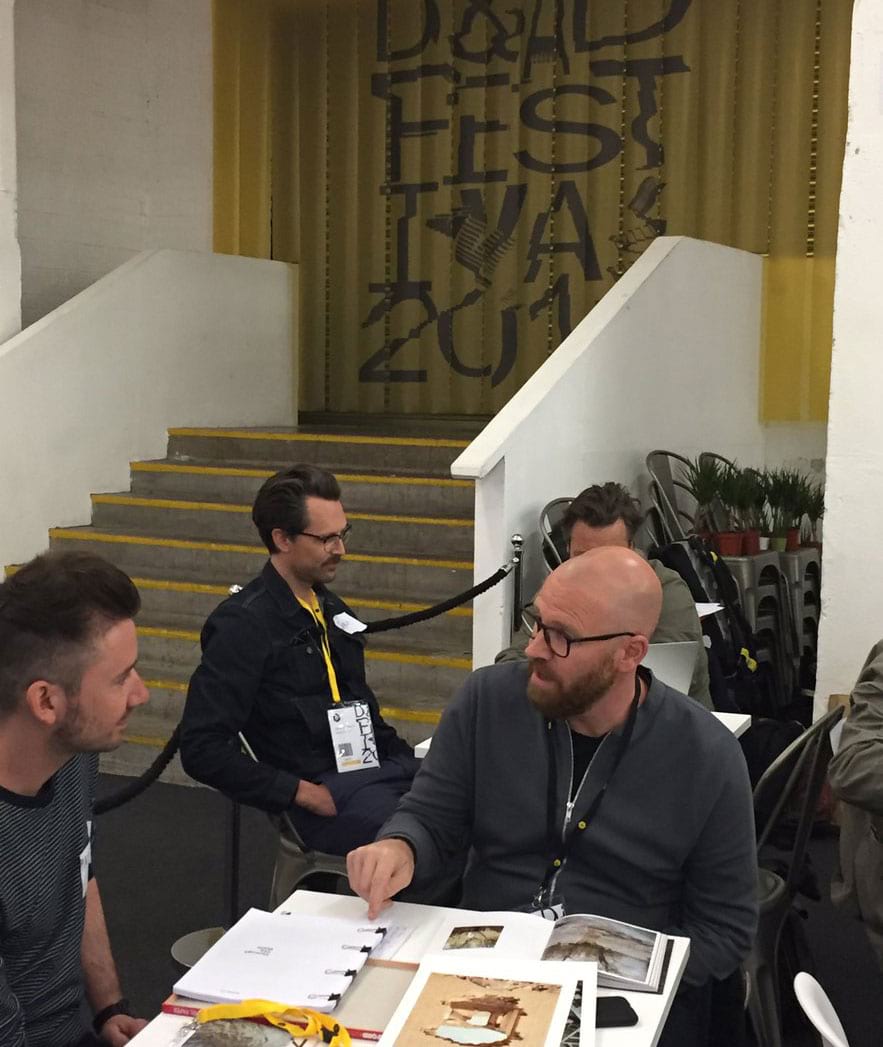
Curious Photography Director Dean Agambar mentored the next generation of budding photographers at the D&AD Awards. The session, which took place at the Festival at the Old Truman Brewery, entailed a ‘speed dating’ arrangement which gave each shortlisted photographer 5 minutes with each mentor. Speaking about his mentor responsibilities, Dean said:
“It was a fantastic opportunity to meet some talented individuals, the diversity and energy made the whole event inspiring.”
Mentors gave advice on their work, how to get into the industry, what do look out for, what to do, what not to do.